

Water heater repair for gas and electric units, including gas water heater repair and electric water heater repair
Water heater replacement and water heater installation
Tankless water heater installation and tankless water heater repair
Water heater maintenance, including a full water heater flush and tankless descaling
Water heater inspection and diagnostic testing
Energy-efficient upgrades for older systems
Every visit starts with a diagnosis, not a sales pitch. You get a clear water heater repair estimate before work begins.
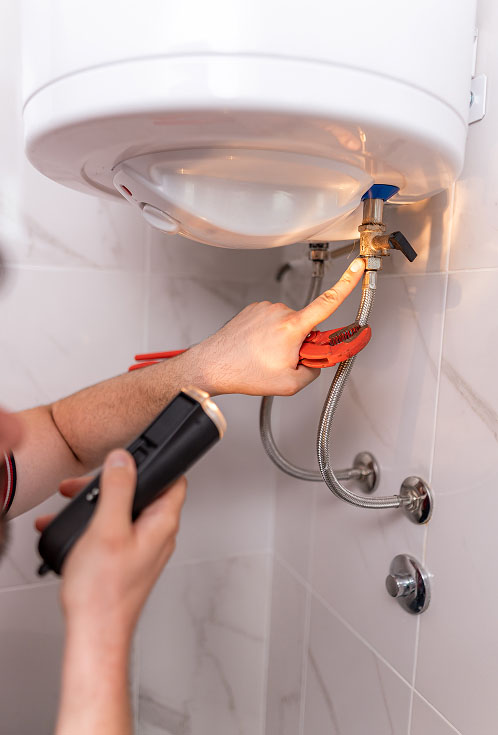
Most water heaters warn you before they quit. Call a licensed plumber if you notice no hot water, water pooling around the tank, rust-colored water, popping or rumbling sounds, or a sudden jump in your energy bills. These are the clearest signs a water heater is failing.
One of these alone may point to a simple fix. Two or three together usually mean the unit is wearing out.
On an electric water heater, the usual causes are a tripped breaker, a failed heating element, or a bad thermostat. On a gas water heater, the pilot light, thermocouple, gas control valve, or burner assembly is usually at fault. A broken dip tube can also send cold water straight to the top of the tank, so the hot outlet pulls cold water.
These parts sit near live electricity or an open gas flame. Replacing a heating element, thermostat, or thermocouple, or repairing a gas control valve, requires a licensed plumber.
Not every leak means the tank is finished. Water can come from a loose water supply line, a worn drain valve, or the temperature and pressure relief valve. Those are repairable.Water seeping from the tank seam or bottom is different. That means the steel shell has corroded through, and replacing or tightening the relief valve won’t help. That unit needs to be replaced.
If water is actively running, close the cold water shutoff valve above the heater. On a gas unit, also close the gas shutoff valve. Then call us.
That sound is sediment buildup on the tank floor. Minerals settle out of the water and form a crust. The burner heats through that crust, and trapped water boils and pops underneath.
Mineral scale does three things: it wastes energy, it slows recovery, and it stresses the steel. A tank flush early on solves it. A tank that has gone many years without one may need replacement instead.
Every tank has an anode rod inside. It is a sacrificial metal rod that corrodes on purpose so the tank does not. Once it is used up, the tank starts rusting from the inside.
Brown or orange hot water usually means the anode rod is spent. Replacing the anode rod during a maintenance visit is inexpensive. Waiting until the tank rusts through is not.
A tankless water heater has no tank, so problems show up in the heat exchanger instead. Scale coats the narrow passages, flow drops, and the unit either shuts down or displays an error code. Reduced gallons per minute at the tap is often the first hint.
Tankless descaling clears it. Left alone, scale can damage the heat exchanger, the system’s most expensive part.

Houston’s water carries dissolved minerals, and those minerals end up inside your water heater.
According to Houston Public Works, about 86 percent of the city’s drinking water comes from surface sources, flowing from the Trinity River into Lake Livingston and from the San Jacinto River into Lake Conroe and Lake Houston. Deep wells drilled into the Evangeline and Chicot aquifers supply the other 14 percent. That water meets the safety standards enforced by the U.S. Environmental Protection Agency and the state, but it still carries calcium and magnesium picked up along the way.
When you heat that water, those minerals drop out of solution. Inside a tank, they settle as sediment. Inside a tankless unit, they form limescale on the heat exchanger. This is what Houston hard water actually does to a water heater, and it is why local units often need flushing more often than the manufacturer’s minimum.
A water softener or whole-home water treatment system reduces the load on the heater and on every fixture downstream. Ask us about water treatment options if you are already fighting scale on faucets and shower heads.

Many Houston-area homes sit on a slab foundation with no basement. That leaves the attic, a closet, or the garage as the only place for the water heater. Attic installations are common across Houston, Katy, Cypress, and Sugar Land.
An attic water heater leak can turn a small drip into ceiling damage. A garage leak runs to the floor. An attic leak runs through insulation, drywall, and whatever is below it.
That is why the plumbing code adopted by the City of Houston requires a drain pan under a water heater installed where a leak would cause damage, and requires that pan to drain through an indirect waste pipe. The T&P discharge line must be routed to release safely and remain visible, and it cannot be trapped or tied into the drainage system.
During any water heater installation in an attic, we check:
Attic heat also matters. Summer attic temperatures accelerate wear on seals, fittings, and valves, which is one reason attic units in this region often show their age sooner than the same unit in a garage.
Not sure what shape yours is in? Schedule water heater service at (832) 898-4922 and we will inspect it.
Repair usually makes sense when the unit is under about eight years old, the tank itself is sound, and the repair costs a small fraction of a new installation. Replace when the tank is leaking, the unit is over ten years old with repeat failures, or you are seeing rust-colored water from the hot tap.
The U.S. Department of Energy and industry sources put a typical tank water heater at roughly 10 to 15 years, while ENERGY STAR notes that tankless water heaters have a life expectancy of around 20 years, longer than any conventional tank-type unit.
Use this as a starting point:
| Situation | Usually replace |
|---|---|
| Failed thermocouple, thermostat, or heating element on a newer unit | Repair |
| Sediment noise on a tank flushed regularly | Repair |
| Water seeping from the tank body | Replace |
| Rust-colored water plus age over ten years | Replace |
| Second or third repair in two years | Usually replace |
| Household outgrew the tank size | Replace and resize |
A water heater diagnostic tells us which column you are in. We will tell you when a repair is the better value, and when it isn’t.
Both work well here. The right pick depends on how your household uses hot water.

Tank water heaters store heated water and are the most common type in Houston homes. A 40-gallon water heater suits smaller households, and a 50-gallon water heater covers most families of three or four. Size is measured by first-hour rating, which is how much hot water the unit can deliver during a busy hour. Tanks cost less up front and are simpler to install. They do lose energy around the clock through standby heat loss.

Tankless water heaters heat water only when a tap opens. The Department of Energy reports that for homes using 41 gallons or less of hot water per day, demand water heaters can be 24 to 34 percent more energy efficient than conventional storage tank models, and 8 to 14 percent more efficient for homes using around 86 gallons per day. Tankless units are sized by gallons per minute, not gallons stored. They free up floor space and remove the risk of a full tank letting go. They cost more up front and need annual descaling in hard-water areas.
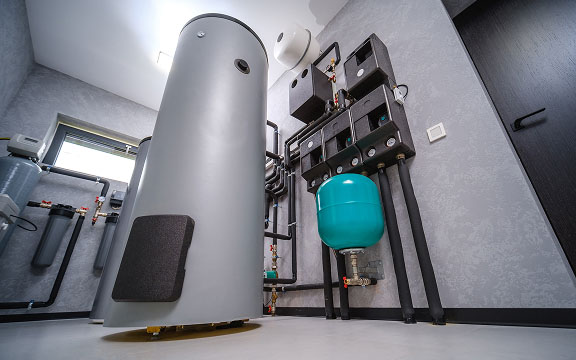
A heat pump water heater is a third option worth considering on the electric side, since it moves heat instead of generating it. A hot water recirculation pump can also cut the wait for hot water at distant fixtures in larger homes.
Wondering what size water heater you need? We size it against your fixture count and household demand, not a guess.
You describe the problem. Call (832) 898-4922 or use the online form. Tell us the symptom, the unit type if you know it, and where it sits in the house.
We diagnose the unit. We test the thermostat, heating element or gas burner, thermocouple, gas control valve, T&P valve, drain valve, and connections. On tankless systems, we check the heat exchanger, filters, and error history.
We explain what we found. In plain language, with the repair and replacement options laid out.
You approve the work. You get the water heater repair or installation cost before we start.
We complete the repair or installation. That includes any needed copper pipe or PEX pipe connections, flue vent checks on gas units, thermal expansion protection, and drain pan work.
We test and clean up. We verify temperature, check for leaks, and confirm safe operation before we leave.
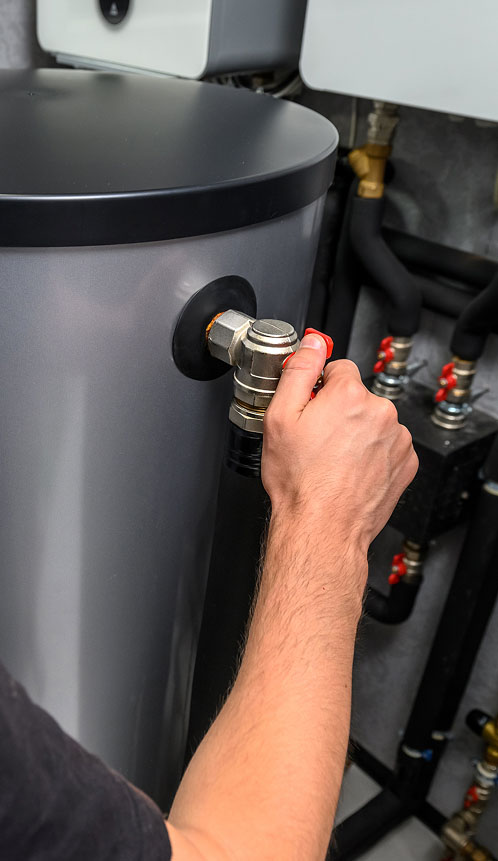
Yes, replacing a water heater inside Houston city limits requires a permit. This surprises a lot of homeowners.
The Houston Permitting Center states that a plumbing permit is required to replace and install water heaters, that a master plumber registered with the City of Houston must obtain the permit, and that an inspection is required. Plan review is not needed for a single-family residence. The rule sits under the City of Houston amendments to the Uniform Plumbing Code and the International Residential Code.
Why this matters to you as a homeowner:
A handyman cannot pull this permit. Neither can you. Ask about Houston plumbing permit requirements for your address before installation day, and ask again if your home sits outside city limits, since Harris County and Fort Bend County communities may follow different local rules.

The Texas State Board of Plumbing Examiners publishes clear steps for homeowners. Get the Responsible Master Plumber’s license number for the company, which should appear in the company’s advertising. Run that number through the board’s public license search to confirm the license is valid and that a certificate of insurance is on file. You can also call the board’s enforcement department to ask about complaints, and check with your local plumbing inspection department about permit requirements.
Planet Houston Plumbing publishes its number so you can do exactly that: Responsible Master Plumber License 46295, licensed and regulated by the Texas State Board of Plumbing Examiners, P.O. Box 4200, Austin, TX 78765, (512) 936-5200.
Ask every plumber you call for that number. A master plumber who will not give it to you is telling you something.
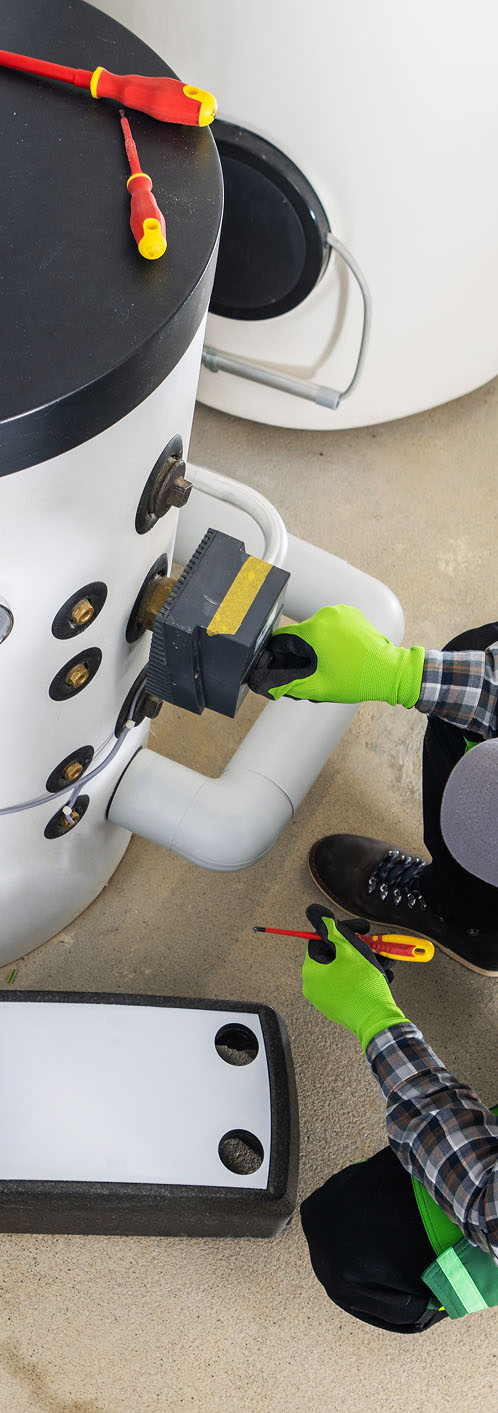
Small habits extend the system’s life and keep bills down.
Flush the tank once a year. Local mineral levels build sediment faster than in soft water areas. A yearly water heater flush keeps the burner or element working against water, not scale.
Descale tankless units every 12 to 18 months. This protects the heat exchanger.
Test the T&P valve annually. It is the safety device that protects against pressure buildup.
Check the anode rod every few years. Replacing it is far cheaper than replacing a tank.
Watch water pressure. High incoming pressure stresses the tank and the whole system. A thermal expansion tank helps when the supply has a check valve or backflow preventer.
Set the thermostat correctly. The Department of Energy notes that most households only need 120°F, that this setting also slows mineral buildup and corrosion in the water heater and pipes, and that a 140°F setting creates a scalding hazard and can waste roughly $36 to $61 a year in standby heat losses.
One safety note on the low end: Do not set it below 120°F. The Centers for Disease Control and Prevention reports that Legionella grows best between 77°F and 113°F, and that growth is possible when warm water temperatures fall below 120°F. That makes 120°F the practical floor and the best water heater temperature setting for most homes, balancing scalding risk against bacterial growth.
One caution about flushing: a tank that has gone many years without service can be a risk to flush, because breaking up old sediment can expose a weak spot. If yours has never been flushed, have it inspected first rather than opening the drain valve yourself.

Licensed and regulated by the Texas State Board of Plumbing Examiners, Responsible Master Plumber License 46295

Homes only. We focus on residential plumbing, which means our team works on the same systems every day

Tank and tankless. We repair, maintain, and install both.

Rated 5.0 across 87 Google reviews, as published on our website.

Over 15 years of experience and more than 5,000 customers served

Clear explanations before work starts, so you decide with real information

A full-service plumbing team, so a water heater visit can also cover the gas line, drain line, or repiping work connected to it
Cost depends on the failed part, the unit type, and where the heater sits. Angi’s Houston cost guide reports a local average around $624, with most repairs falling between $237 and $1,010. Replacement costs more and varies widely by fuel type and access. We provide your price before work begins, so call (832) 898-4922 for a water heater repair estimate on your unit.
Repair a unit under about eight years old with a sound tank and a single failed part. Replace when the tank body leaks, when the unit is past ten years with repeat failures, or when you see rust-colored water. You can’t repair a leaking tank because the steel shell has corroded through. A water heater diagnostic confirms which situation you have.
A conventional tank water heater typically lasts 10 to 15 years. ENERGY STAR reports that tankless water heaters last about 20 years. Hard water shortens both numbers when the system is never flushed. Annual maintenance is the single biggest factor in reaching the top of those ranges.
Yes. The Houston Permitting Center states that a plumbing permit is required for water heater replacement and installation, that a master plumber registered with the City of Houston must obtain the permit, and that an inspection is required. Plan review is not required at a single-family residence. Homeowners and unlicensed handymen cannot pull this permit.
Flush tank units once a year and tankless systems every 12 to 18 months. Local water carries dissolved calcium and magnesium that settle as sediment, so Houston-area homes benefit from sticking to a yearly schedule. If your tank has gone five or more years without a flush, have it inspected before draining it yourself.
Often, yes, for homes where you plan to stay put. The Department of Energy reports that demand water heaters can be 24 to 34 percent more energy efficient than storage tanks in homes using 41 gallons or less of hot water per day. They also last longer and remove the risk of a full tank failing. The trade-offs are a higher install cost and required descaling in hard water.
Close the cold water shutoff valve above the heater. On a gas water heater, also close the gas shutoff valve. Do not stand under an attic unit. Then call (832) 898-4922. Shutting off the supply stops the flow, and it protects your ceilings, floors, and drywall while you wait.
No. Planet Houston Plumbing serves residential properties only. If you are searching for water heater repair near me for a home in Houston, Katy, Cypress, Sugar Land, Fulshear, or Richmond, we can help. For a business property, you will need a commercial plumbing contractor.
Cold showers do not fix themselves, and a leaking tank gets worse every day it waits.
Call (832) 898-4922 or contact a licensed plumber online to schedule water heater service. We will diagnose the problem, explain your options, and give you the price before any work starts.