You may not owe anything. Your home connects to Houston’s sanitary sewer system through two pipes, each owned by a different party. You own the sewer lateral, the pipe running from your home to the City’s sewer main. The City owns the main. Houston Public Works uses the sewer cleanout to mark where its system begins, and you can run a simple test yourself.
Look for the cleanout in your yard near the street. It is usually a white plastic pipe with a cap, sometimes under a metal cover.


This takes about a minute. Houston Public Works recommends exactly this check before you call anyone. We would rather you make the free call than pay us for a problem the City owns.
If the test points to your side of the line, call (832) 898-4922 and we will come look at it.
One slow sink is usually a local clog. A sewer line problem shows up in more than one place. Watch for these signs:


Stop running water if sewage is actively backing up. Every flush adds pressure. Raw sewage carries bacteria, viruses, and parasites, and the EPA classifies sewage backups into buildings as a public health risk. Keep people and pets away.
We handle residential sewer repair from the first camera pass to the final cleanup. We work on homes only. Planet Houston Plumbing does not service commercial or business properties. We also handle related work, including drain cleaning and whole-home repiping.

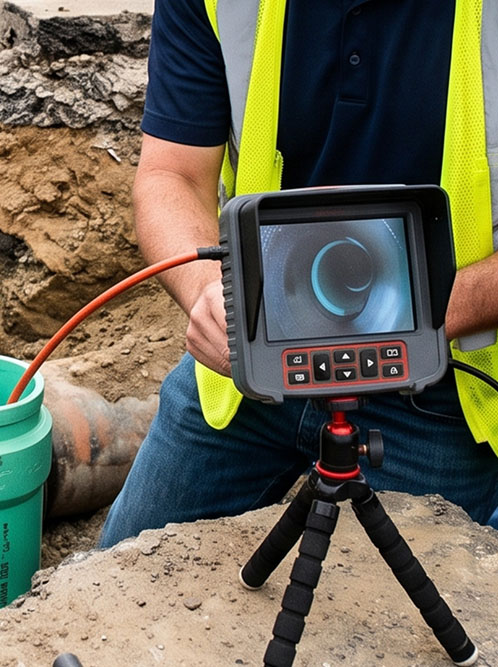
Sewer camera inspections to see inside the pipe

Trenchless sewer repair to limit digging

Main sewer line repair for a cracked or broken sewer pipe and separated joints

Sewer cleaning and sewer line cleaning, including hydro jetting and drain snaking to clear blockages

Broken sewer line repair and sewer lateral repair, including sewer pipe repair under a slab

Sewer backup solutions for homes with repeat problems

Sewer line replacement when the line is past saving
Houston sits on expansive clay soil. The City’s Office of Emergency Management describes how these soils swell when wet and shrink when dry, with volume changes of 10% or more common here. That is the shrink-swell cycle, and it repeats every wet and dry season.
Most Houston-area homes sit on a slab-on-grade foundation, and the building drain and building sewer often run under or through that slab. When the ground moves, rigid pipe does not. Over years, that stress opens pipe joints, creates an offset pipe joint, or leaves a low spot called a bellied sewer line. A sagging sewer line holds water and waste instead of draining, so clogs return no matter how often you clear the line.
This is the most common under-slab sewer leak pattern we see in Harris County and Fort Bend County homes.
Pipe material tells you a lot about risk.
If your home predates the mid-1970s and still has original cast iron, pipe corrosion is a reasonable thing to check for even without symptoms.
Roots look for water. The EPA lists tree root intrusion through defects and openings in a sewer line as a leading cause of blockages. Once roots take hold in sewer line joints, they trap paper and grease and keep growing back after every clearing. Root removal helps, but if the roots got in through a cracked sewer pipe, the pipe itself needs attention.

Houston Public Works reports that 70% of sewer overflows in Houston come from fats, oils, and grease poured down drains, plus wipes flushed down toilets. Grease buildup cools and hardens inside the pipe, narrowing it. Wipes labeled flushable do not break down. Together they cause a main line clog that no amount of plunging will fix.

Guessing is expensive. Our process is built to find the actual fault before anyone talks about tearing something up.


When damage is limited to one short section, we dig to that section and replace it. A spot repair or sectional repair is the least invasive and least expensive fix. It works when the rest of the line is sound.

When a line is broken in several places or has reached the end of its material life, sewer line replacement is the durable answer. Open-cut excavation means trenching along the line, removing the old pipe, and laying new PVC. It costs more in surface restoration but allows full grade correction, which matters when bellies are the problem.
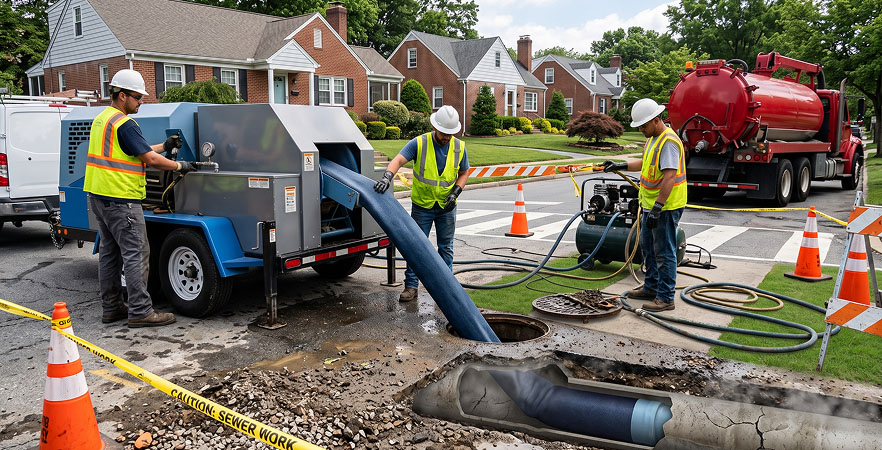
Trenchless sewer repair fixes the pipe through small access points instead of a full trench.

When the failure sits beneath the slab, there are two approaches. Tunneling under the slab lets crews reach the pipe from outside and work underneath the foundation, keeping demolition out of your living space. Sewer line rerouting abandons the failed run and routes a new line around the slab instead of under it. Which one makes sense depends on depth, distance from the perimeter, and what the camera shows.
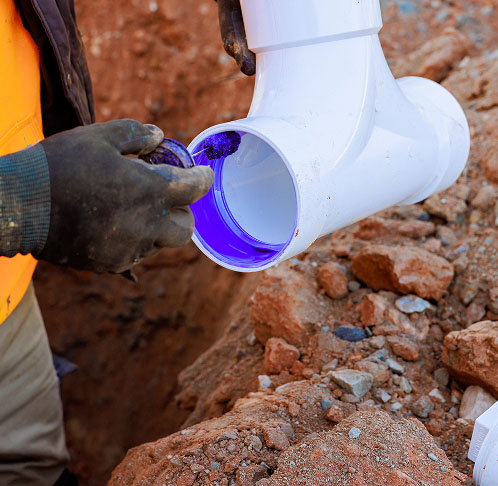
Drain snaking punches a hole through a clog to restore flow. Hydro jetting scours the whole pipe wall clean with high-pressure water. Snaking is faster and cheaper. Jetting lasts longer. The right choice depends on what is in the pipe and what the pipe is made of.
| Situation | Usually repair | Usually replace |
|---|---|---|
| One cracked or broken section, rest of line sound | Yes | – |
| Roots at one or two joints | Yes | – |
| Collapsed sewer line | – | Yes |
| Damage in several places along the run | – | Yes |
| Bellies causing repeat backups | – | Yes, with grade correction |
| Orangeburg pipe still in service | – | Yes |
| Cast iron with heavy scale but intact walls | Lining may work | If walls are compromised |
| Clogs that return within weeks of clearing | Inspect before deciding | – |
A good rule: if clearing the line stops working, the problem is the pipe, not what is going down it. If you have already been quoted a full replacement and it does not sit right, get a second opinion with camera footage you can watch yourself.

Cost depends on the line length, depth, pipe material, repair method, and how much surface needs to be restored afterward. Published third-party estimates for the Houston market vary widely: general sewer line repairs range from roughly $150 to $3,800 depending on method.
Treat those as ranges, not quotes. A five-foot spot repair near the property line and a full sewer line replacement running under a driveway are different projects with different numbers. Any sewer line replacement cost you see online averages homes that aren’t yours.
A licensed plumber in Houston should be willing to put the price in writing before work begins. Ask for that.
Planet Houston Plumbing gives you a sewer repair estimate after we see the footage. Check our current coupons before you schedule.

Yes, sewer work in Houston generally requires a plumbing permit. The Houston Permitting Center requires a plumbing permit for sewer connection work, and a master plumber registered with the City of Houston must obtain it. Work done under a plumbing permit must then pass a City plumbing inspection, including a sewer inspection, before the job is closed out.
This is useful to you as a homeowner. Ask any contractor two questions before you hire them:
Anyone who dodges either question is telling you something. You can verify a Texas plumbing license through the Texas State Board of Plumbing Examiners license search. Ours is Responsible Master Plumber License 46295.
Unpermitted sewer work can also cause problems years later, when you sell.

Most homeowners deal with a serious sewer line problem once. These habits push that date further out.


Skip store-bought chemical drain cleaners on a suspected main line clog. They rarely reach the blockage and can damage older pipes.

Licensed and regulated by the Texas State Board of Plumbing Examiners, Responsible Master Plumber License 46295

Residential focus. We work on homes, not commercial buildings, so our crews do one kind of work

15+ years of experience and more than 5,000 customers served

5.0 rating across 87 Google reviews at the time of writing

Advanced plumbing inspection equipment, so recommendations come from footage rather than guesswork

High-quality parts and materials and long-lasting plumbing solutions

Friendly technicians who explain the problem before starting work

Houston homeowners are responsible for the private sewer lateral running from the house to the City’s sewer main. Houston Public Works is responsible for public pipes and those in the public right-of-way. Check the cleanout near the street: standing sewer water there points to a City problem, so call 311. A dry cleanout with backed-up drains inside points to your line.
There is no flat rate. Cost depends on the line’s length and depth, the pipe material, the repair method, and how much concrete or landscaping needs to be restored. Published third-party estimates range from a few hundred dollars for a simple repair to well over ten thousand for a full replacement under a slab. A camera inspection turns that range into an actual number.
Most residential sewer lines last 50 to 100 years, depending on material and conditions. PVC sewer pipe generally lasts longest. Cast iron pipe commonly runs 50 to 100 years but can begin deteriorating internally much earlier. Clay sewer pipe is vulnerable at the joints. Orangeburg pipe has the shortest life and is usually replaced on discovery.
Yes, sewer connection work in Houston requires a plumbing permit, and a master plumber registered with the City of Houston must pull it. The work must then pass a City plumbing inspection before it is finalized. Always confirm your contractor is pulling the permit. Unpermitted work can create problems when you sell the home.
Usually not. Standard policies typically exclude damage from age, wear, and tree roots. Many insurers offer optional service line coverage or a sewer backup endorsement that can help. Check your specific policy and endorsements, and ask your agent directly rather than assuming. Coverage varies significantly between carriers.
Often, yes. Trenchless sewer repair uses small access points instead of a full trench. CIPP lining installs a resin liner inside the existing pipe, and pipe bursting pulls new HDPE pipe through while breaking the old one outward. Both protect driveways and landscaping. A camera inspection determines whether your line is a candidate, since severely collapsed pipe sometimes is not.
A spot repair can often be completed in a day. Full sewer line replacement typically takes one to several days depending on length, depth, and obstacles. Trenchless methods usually finish faster than open-cut excavation because there is less digging and less surface restoration. Under-slab work involving tunneling takes longer. We give you a timeline with your estimate.
No. Planet Houston Plumbing serves residential properties only. We do not provide plumbing services for commercial or business properties. If you manage an apartment complex, restaurant, or office building, you will need a contractor who handles commercial work, including grease trap requirements regulated by the City of Houston.
Planet Houston Plumbing provides sewer line services to homeowners across the Houston metro, including:
Our office is at 24285 Katy Fwy, Katy, TX 77494. We serve homes across Harris County and Fort Bend County. Not sure if you are in range? Call and ask.

If drains across your home are slow, if you smell sewage, or if the yard is soggy over the sewer line, the problem will not improve on its own. Check your cleanout first. If the issue is on your side of the line, we will find it with a camera and show you the footage before recommending anything.
Call Planet Houston Plumbing at (832) 898-4922 or request a sewer line inspection online. You can also email info@planethoustonplumbing.com. More answers are on our FAQ page.